
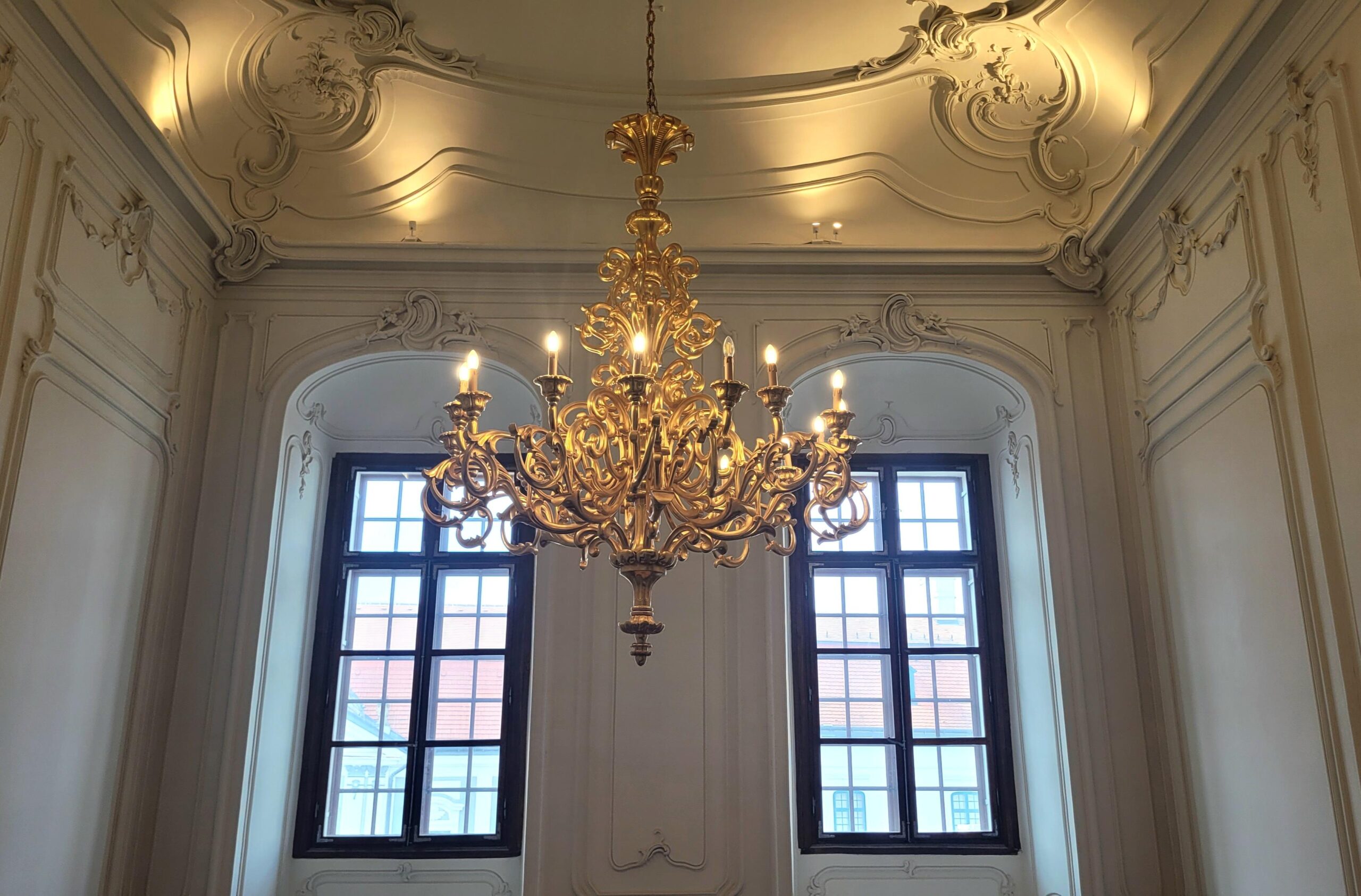
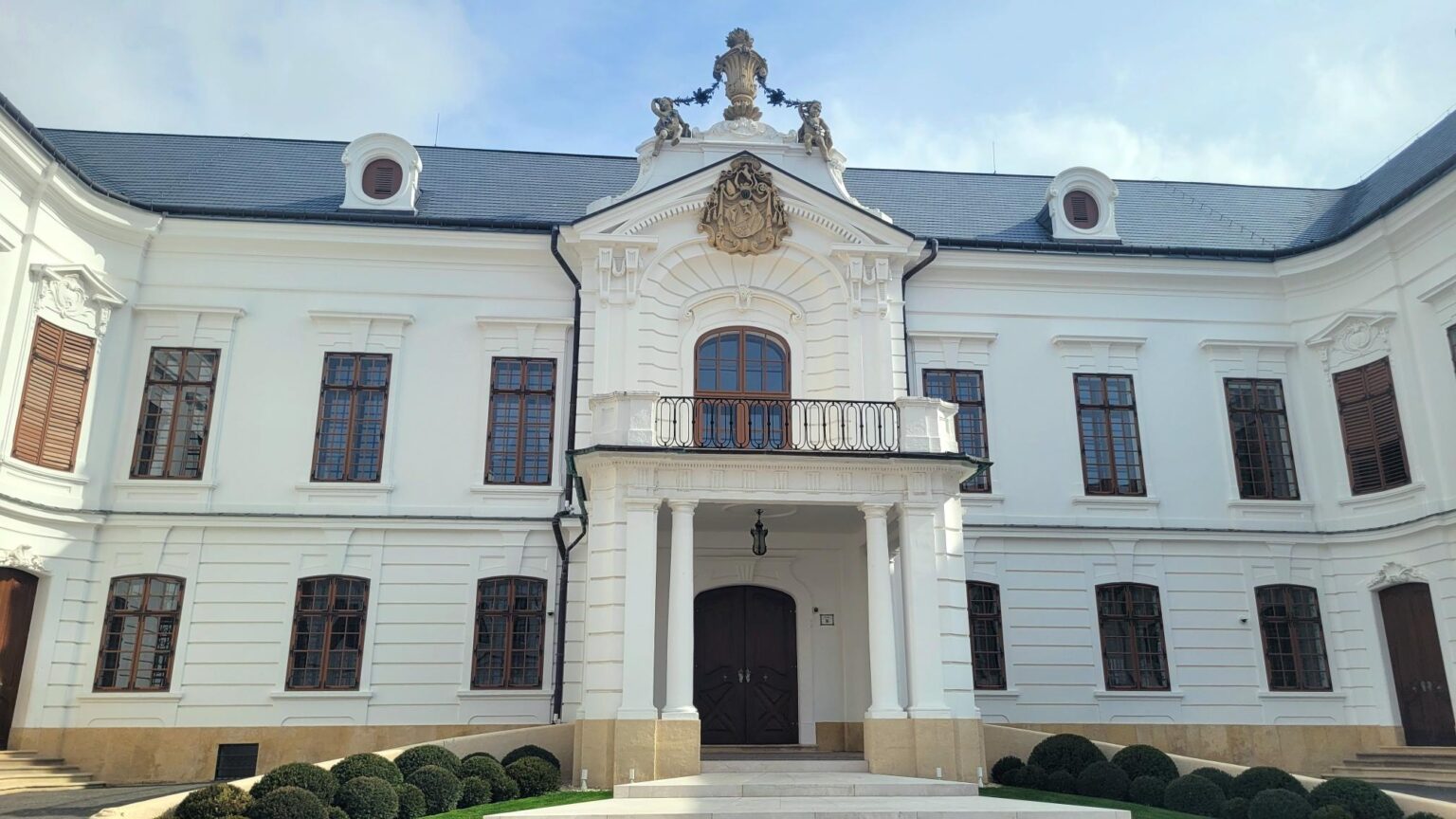
There are spaces that do not rush you, but rather encourage visitors to pause for a moment and move forward with greater awareness. The Baroque staircase of the Archbishop’s Palace in Veszprém is such a place—a transition from the outside world into the inner order of representation.
The palace was built in the second half of the 18th century and designed by Jakab Fellner. The staircase is not a mere architectural detail, but a key element of the spatial layout: it is situated along the palace’s central axis and sets the direction of the path from the very first steps. Baroque architecture paid particular attention to the experience of arrival, so the staircase here does not merely connect two levels, but serves as a kind of introduction to the world of the upper spaces.
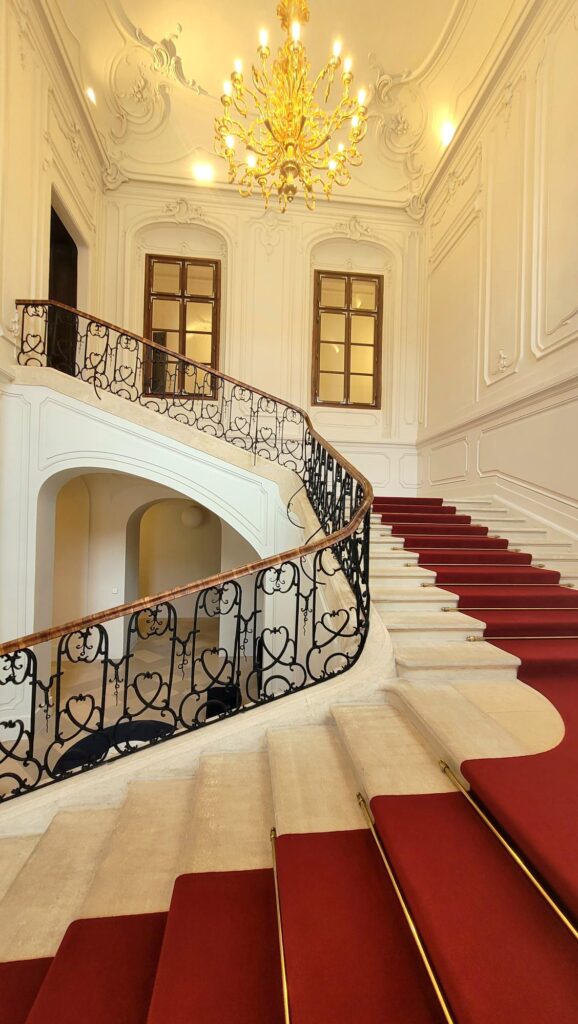
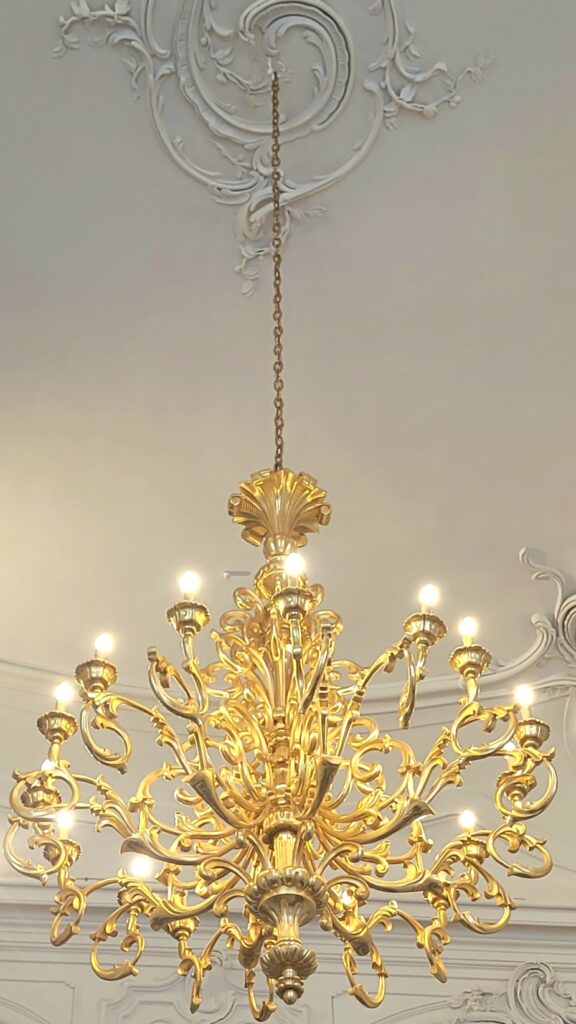
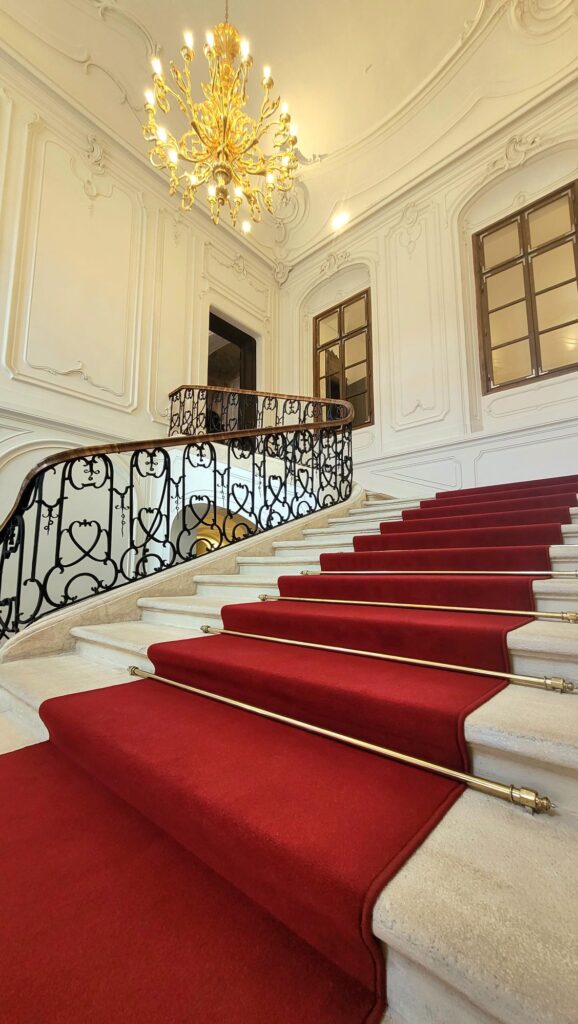
As visitors make their way upward, the proportions of the space and the delicate curves of the stucco decoration work together to shape the rhythm of their movement. The patterns running along the walls follow the arc of the steps, and the space opening upward gradually guides the gaze and attention. Nothing spectacular happens, yet everything works toward a sense of slowing down: the pace of walking becomes more orderly, the gaze is drawn upward, and noises fade into the background.
In the 18th century, this route was anything but ordinary. The staircase served as a symbol of rank, arrival, and solemnity. Anyone who walked here knew they were entering an important space where their presence carried weight. In 1908, Emperor Franz Joseph also ascended these stairs when the palace served as an official residence. The function and significance of the space were clear at that time: to demonstrate power, order, and the dignity of the ecclesiastical center.
Perhaps there isn’t such a big difference between visitors in the 18th century and those of today. Then as now, we enter a space that leads us from the everyday into a more orderly, festive state. Back then, social status gave this its meaning; today, it is more about the experience and the attention.
During the guided castle tours starting at the Biró–Giczey House, there will be several opportunities to explore this square and learn about its significance. The tours starting this weekend connect the Archiepiscopal Palace with other key sites in the castle district, allowing the staircase to be understood not as a standalone attraction but as part of a broader historical journey.
Does the Baroque space truly transform the visitor, or does it simply offer an opportunity to perceive the way we enter a space differently, if only for a moment?

