
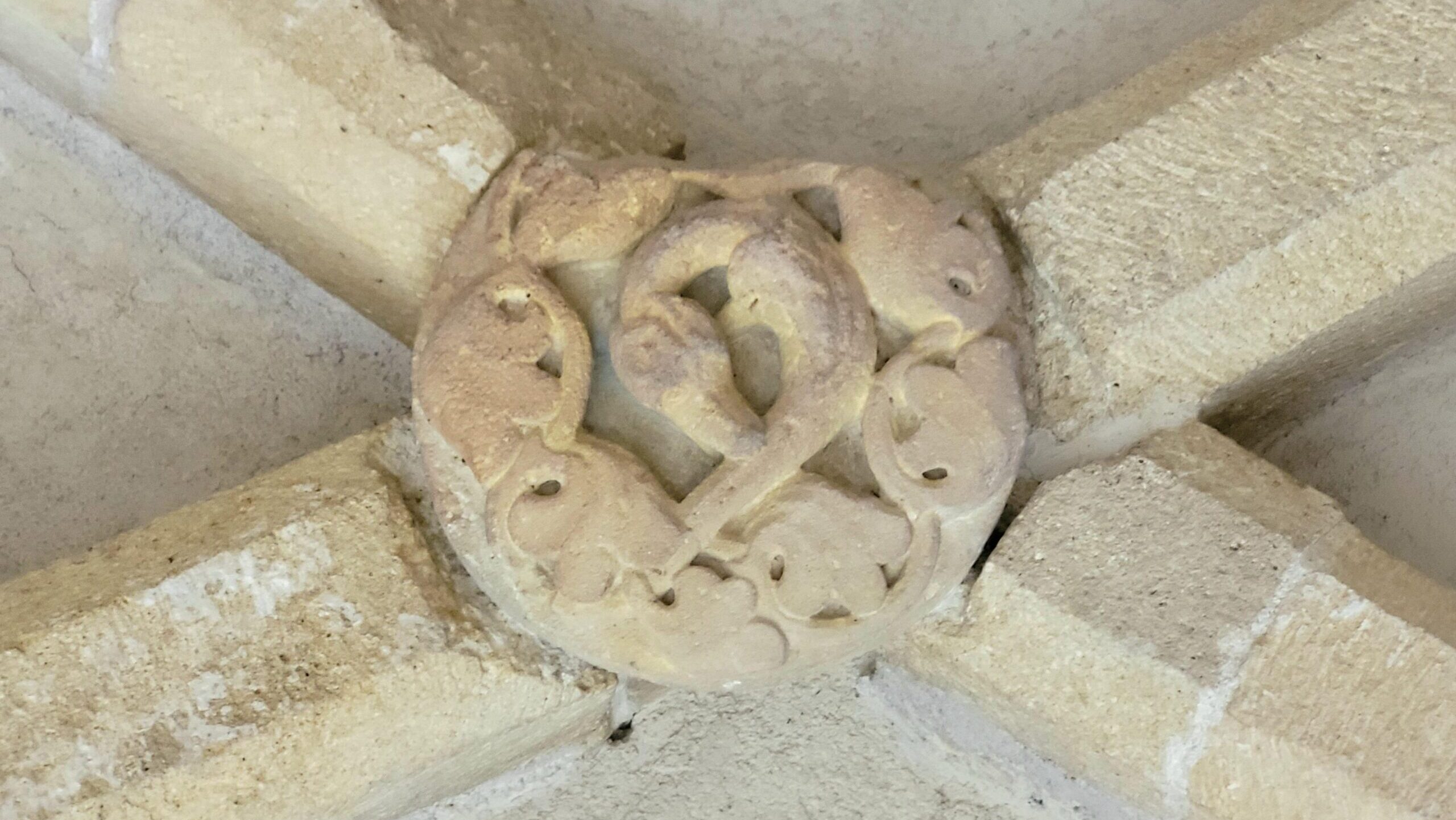
Small medieval markings on the vault of the Gizella Chapel
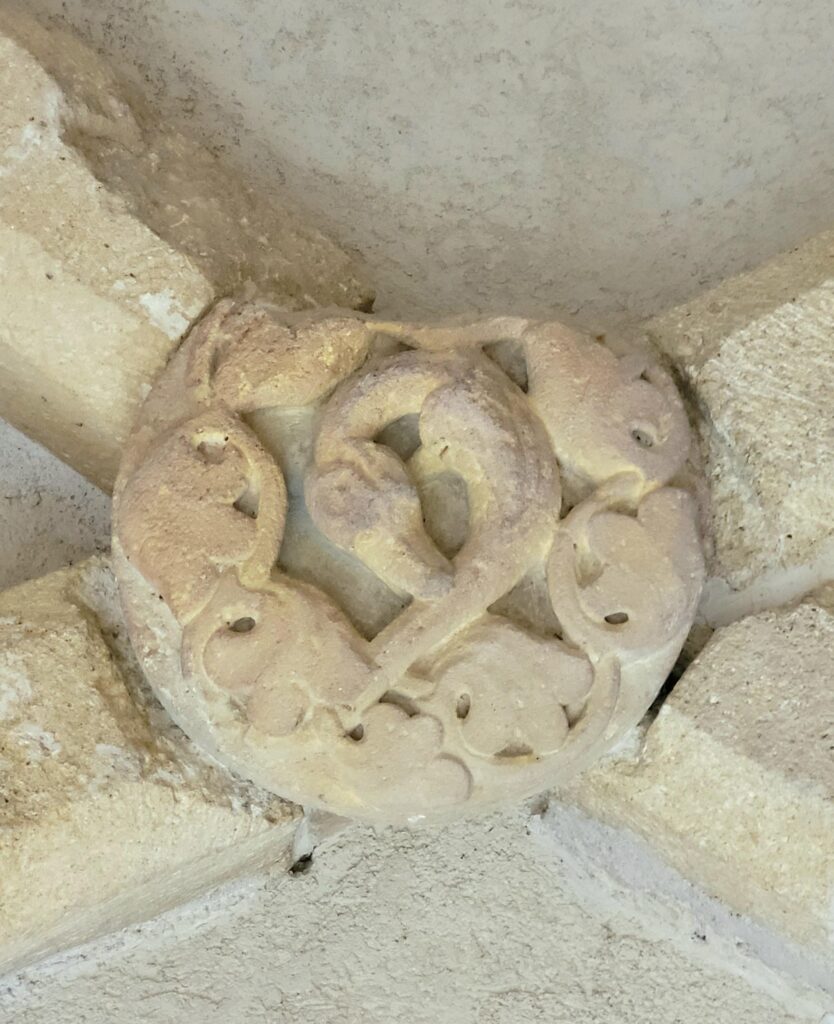
Upon entering the Gizella Chapel, the visitor’s gaze instinctively turns toward the walls. The rhythm of the frescoes is clear, and the proportions of the space are well-defined. After a few seconds, however, it is worth looking up. Near the vault, where the stone ribs meet, a tiny carved detail emerges: a dragon figure. It is not highlighted as a spectacle, nor is it specially illuminated. It is situated exactly where the medieval master envisioned it, at the apex of the structure.
The keystone is one of the most important elements of a ribbed vault. This is where the arched ribs converge, and where the structure is anchored. In medieval architecture, this point served as both a structural and visual focal point. In the case of this chapel, the situation is particularly fascinating. During the 18th-century renovations, some of the medieval stone carvings were preserved and reincorporated into the structure. As a result, carved elements can be seen today that may have been positioned differently in their original locations. A single stone bears the decisions of multiple eras.
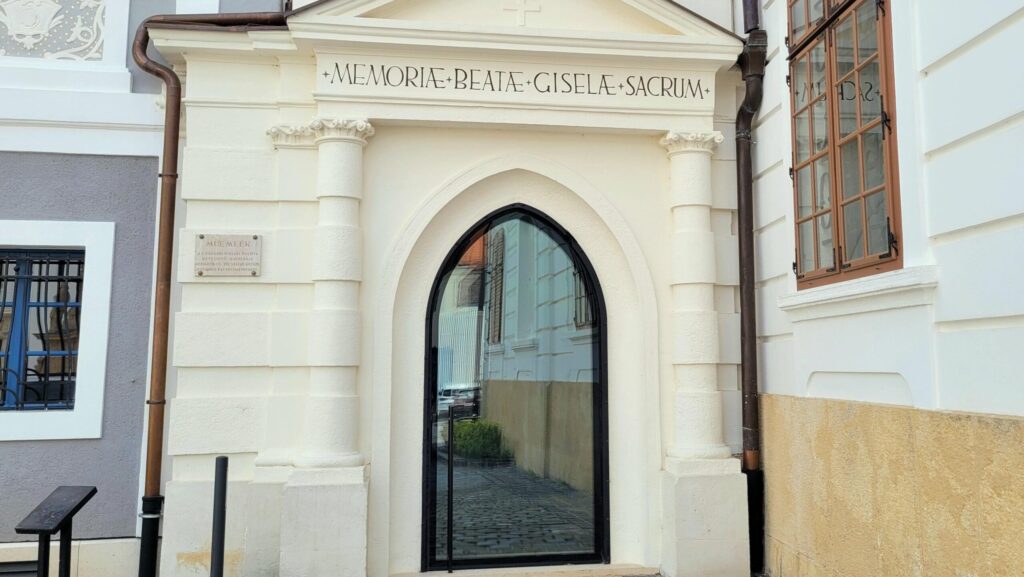
But what is a dragon doing in a chapel?
The decoration of medieval churches was not limited to a single type of religious symbol. Animal figures, hybrid creatures, plant motifs, and geometric shapes frequently appear in the stone carvings. The dragon carried multiple meanings in the visual thinking of the era. It could appear as a symbol of evil, as a form of chaotic forces, or as one of the strange creatures of the created world. These figures were not isolated decorative elements, but rather parts of a broader visual system. The dragon carving in the Gizella Chapel fits into this system. Based on its location, size, and execution, it reflects the thinking of the stonemason’s workshop: at the apex of the structure appears a motif that conveys both meaning and form. The dragon does not dominate the space, yet it catches the viewer’s eye. For those who notice it, the chapel is no longer just a collection of frescoes and walls, but a carefully constructed medieval image in which every element has its place and role.
Visits to the Gizella Chapel are available as part of a guided tour of the castle. During the upcoming Gizella Days, the Archdiocese of Veszprém is preparing a particularly rich program.
Anyone who steps inside knows that it’s worth looking not only ahead but also up.