A dragon high up on the vaulted ceiling, a Latin phrase on the threshold of a chapel. Sphinxes in the archbishop’s palace, thistles in an old engraving, music flowing from the pipes in the cathedral. For centuries, Veszprém’s Castle District has spoken through stones, images and sounds. Anyone who deciphers this language can discover a whole world.
The dragon that has been waiting for eight hundred years
In the Gizella Chapel, the figures of the apostles from the 13th century gaze back at us. The folds of their robes and the features of their faces preserve the rhythm of a medieval painter’s hand. Yet one of the most fascinating beings in this place has soared even higher.
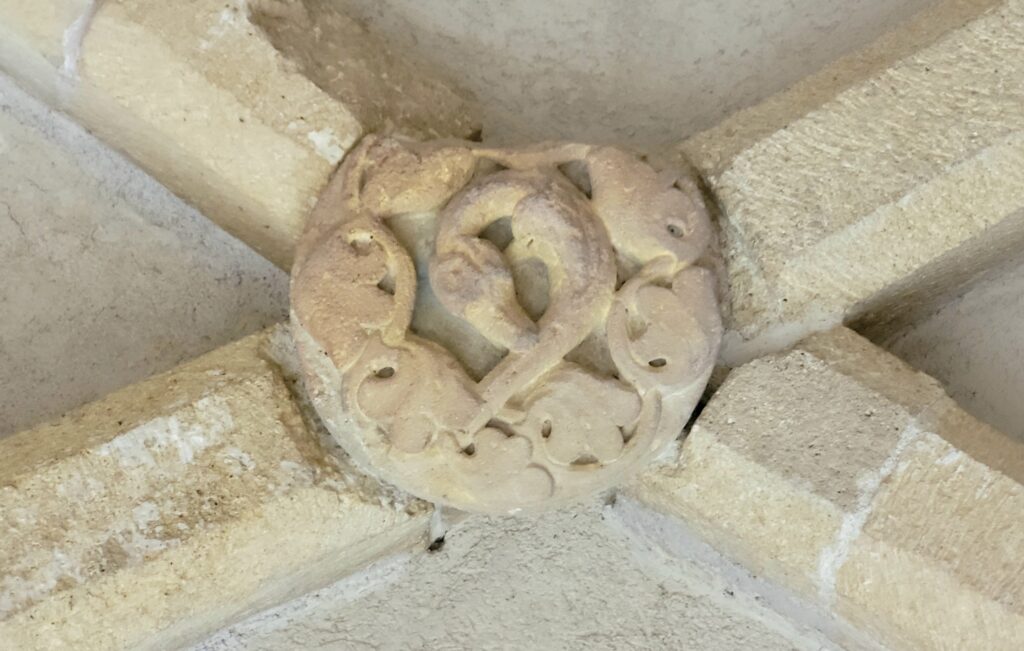
Near the vault, a tiny dragon peeks out from among the carved stones. To people of that era, it may have symbolised chaos, danger and the evil that must be vanquished. At the same time, it found its place amongst the marvellous and fearsome creatures of the created world.
This is the first rule of exploring Várhegy: it’s worth paying attention in every direction. The walls tell a story, the ceiling makes a statement, the threshold calls out to you, and a flight of stairs lends grandeur to your arrival. The visitor becomes a tracker.
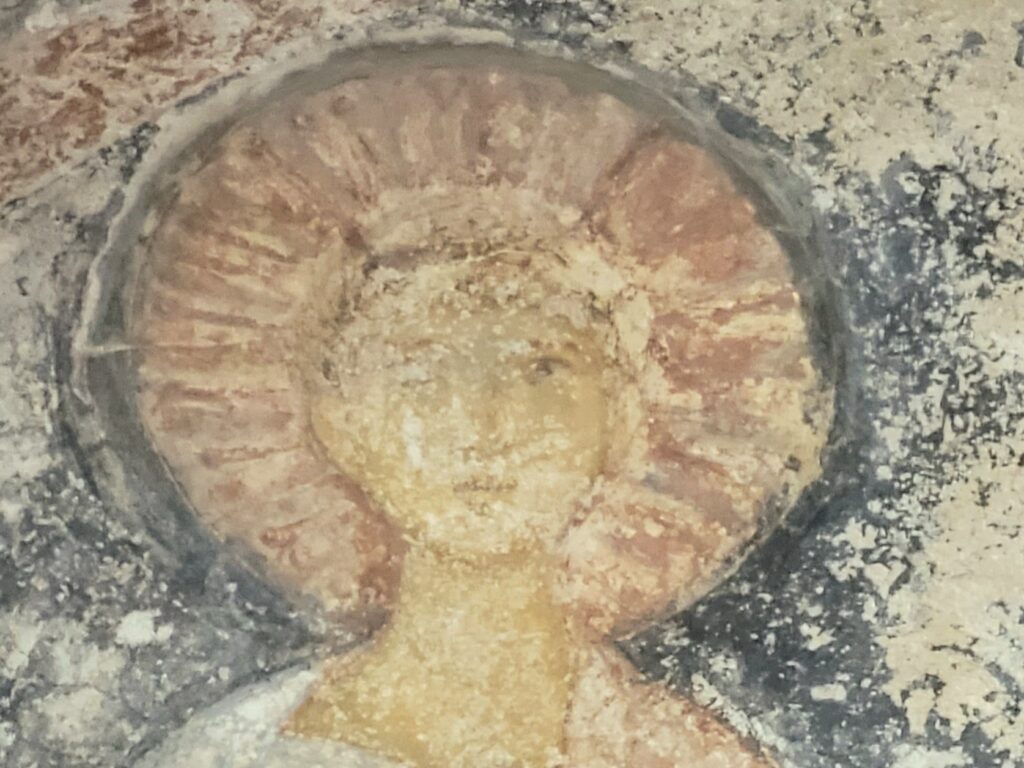
The Middle Ages in Pictures
A halo, a flower or a hand gesture could encapsulate entire stories. People understood these motifs in the same way that we understand road signs or the icons on our mobile phones.
The Veszprém Castle brings together the visual languages of several centuries. The apostles in the Gizella Chapel evoke the foundations of the Christian community. The Archbishop’s Palace, meanwhile, speaks to its visitors through its architectural axes, mirrors, stucco and gilding. The painted rooms of the Biró–Giczey House bring together ancient mythology, biblical themes, science and nature.
Within a few hundred metres, the thinking of three different eras comes into view.
The inscription on the threshold stone
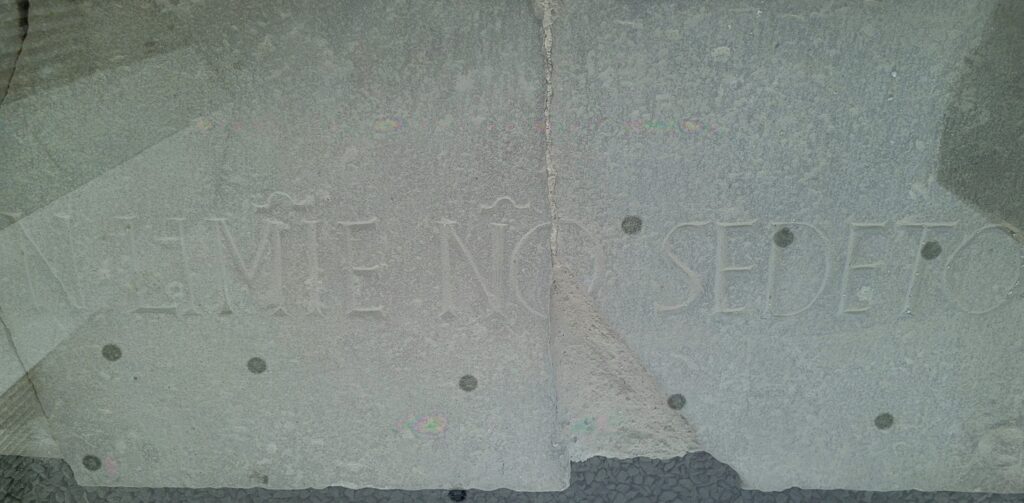
There was a short Latin inscription above the entrance to St George’s Chapel: In limine non sedeto – that is, “Don’t sit on the threshold.”
At first glance, it seems a simple instruction. Behind it, however, the image of a busy place of pilgrimage emerges. Tradition links Prince Saint Imre’s vow to this place, whilst the relic of Saint George drew worshippers from far and wide to Veszprém. People would enter, pray, and then move on. The entrance had to remain unobstructed.
A single surviving sentence evokes a sense of mass, movement and human behaviour. You can almost hear the footsteps.
The ‘Journey Through a Thousand Years’ tour guide pieces together the bigger picture from such small clues. The route, which takes in St Michael’s Cathedral, the crypt and St George’s Chapel, illustrates how Castle Hill became one of the earliest centres of Hungarian Christianity and statehood.
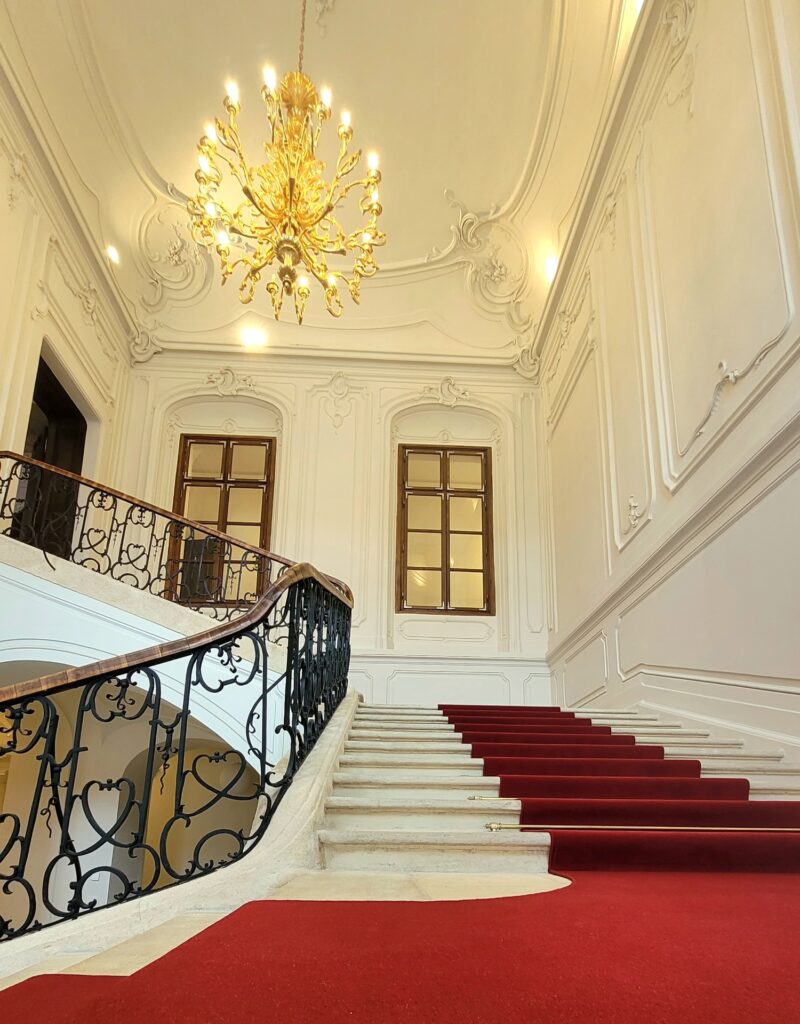
The staircase of the Archbishop’s Palace
Guests arriving at the palace receive a message as soon as they set foot on the first few steps. Baroque architecture guides their movement: it slows their pace, draws their gaze upwards and heightens their anticipation.
An 18th-century visitor would have immediately understood the host’s status from this. The proportions of the space and the delicacy of the stucco work conveyed the same message: you had arrived at an important centre. In 1908, Franz Joseph also followed this route.
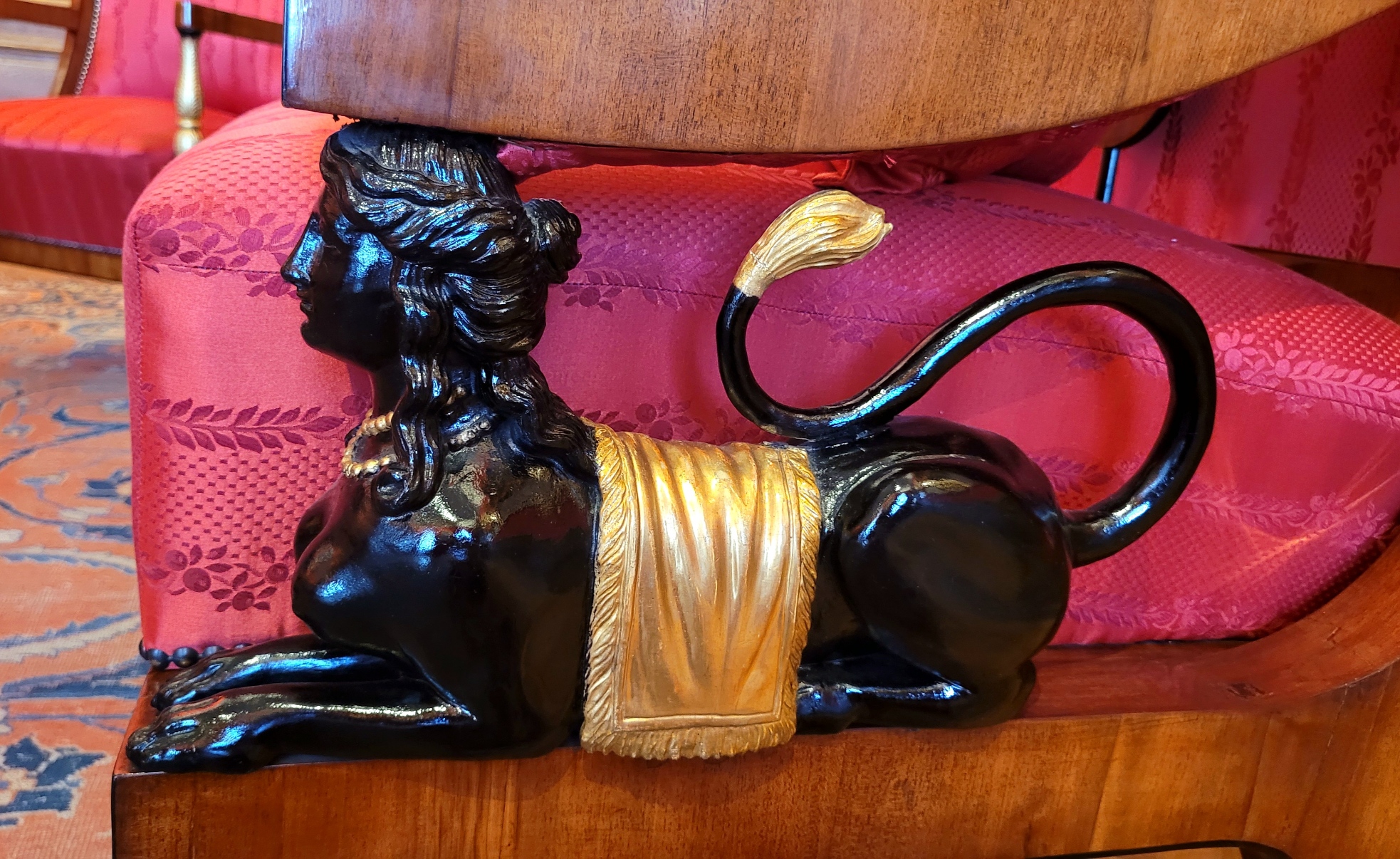
In the Red Salon, a new alphabet takes centre stage. Sphinxes, antique motifs and gilded details appear on the walls of the ecclesiastical residence. The ‘Walk of Light and Devotion’ links this carefully composed Baroque world with the medieval tranquillity of the Gizella Chapel. The few steps between the two venues bridge a cultural gap spanning several hundred years.
The thistle that tells of human destiny
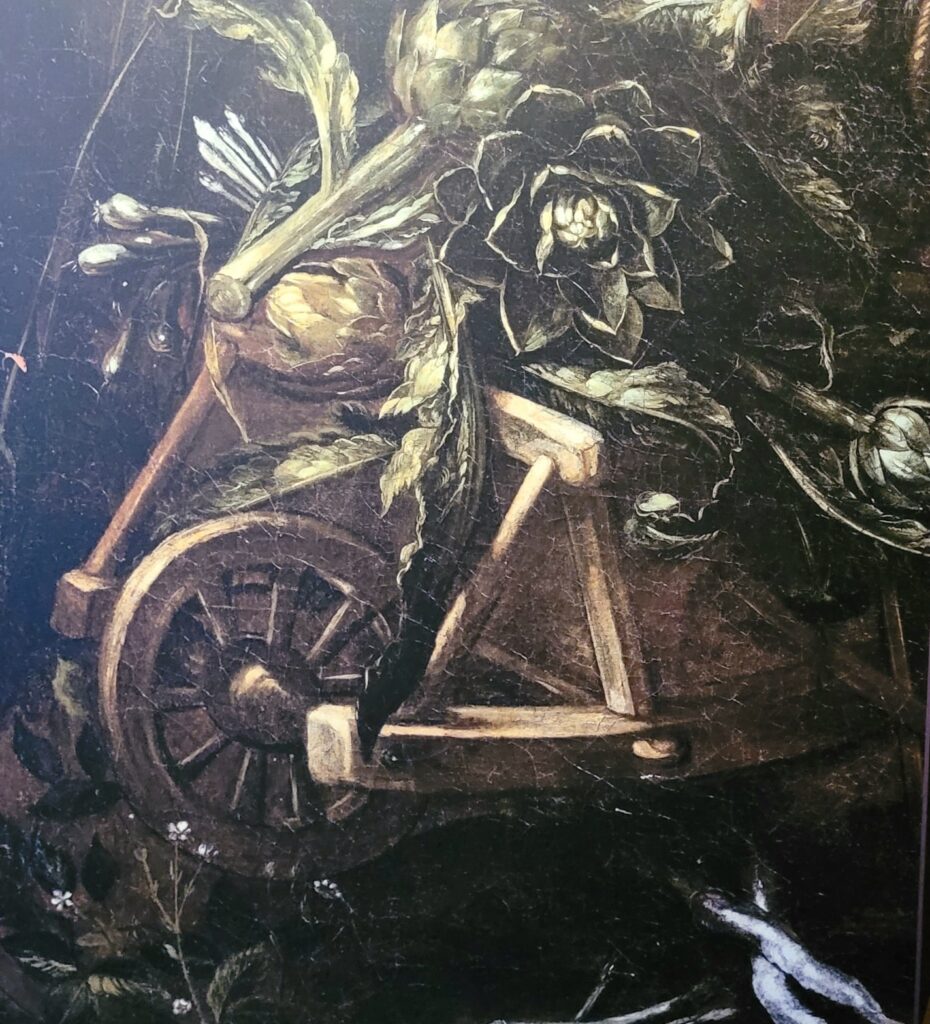
In the exhibition *Thistles and Lilies – The Flowers of the Magdolnas*, the plants are each given their own story. The lily is a well-known symbol of purity, but the thistle conveys a more complex message: its thorns symbolise pain, its purple flowers signify inner transformation, and its healing power points to renewal.
In depictions of Mary Magdalene, the thorny plant becomes a symbol of repentance. In a 17th-century engraving, the artist concealed his name right next to it. A similar motif also appears in Franz Anton Maulbertsch’s fresco in Sümeg. The same flower simultaneously symbolises a saint, an artist and a state of mind.
The UV-lamp treasure hunt linked to the award-winning exhibition literally reveals invisible clues. The child holds the light source, whilst the adult holds the historical knowledge; solving the puzzle becomes a shared experience.
Anyone stepping out onto Vár Street from here looks around with fresh eyes. They know that a tiny carving, a weathered inscription or an unusual flower can preserve centuries of history.