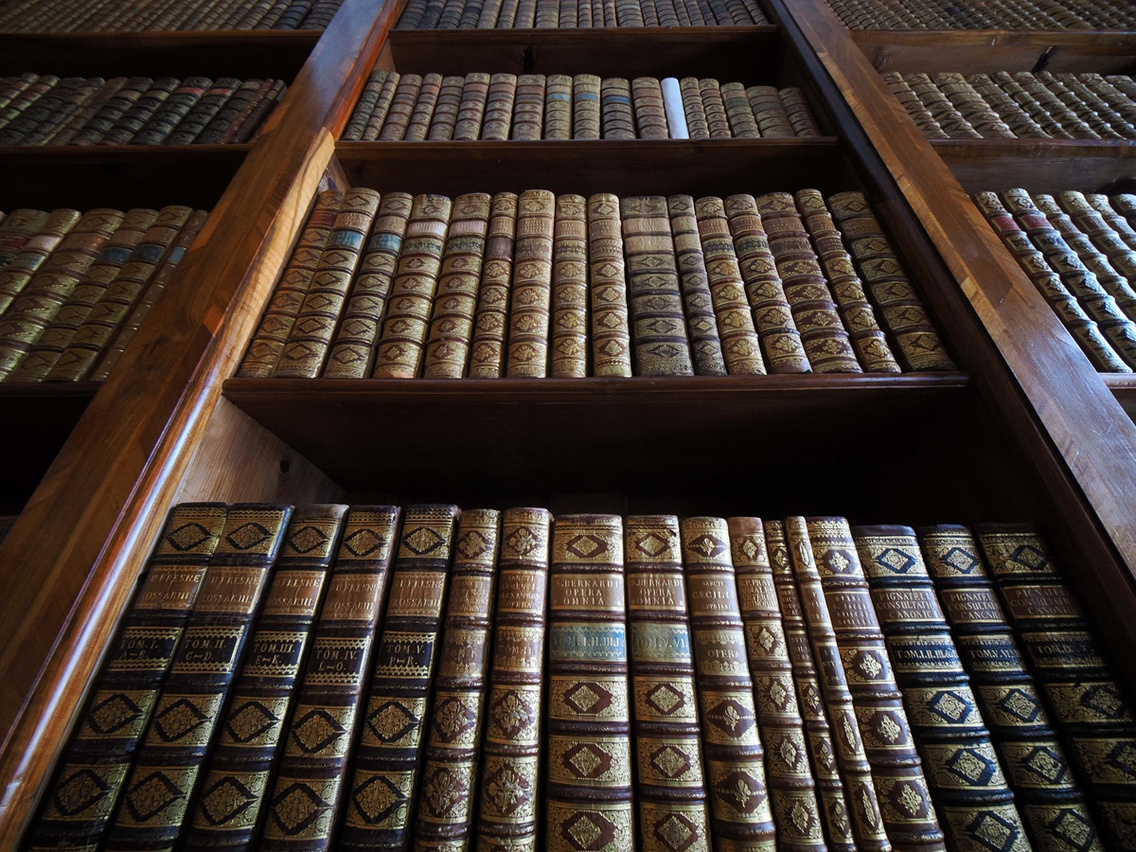
In one of the upper wings of the Archbishop’s Palace in Veszprém, there is a room that at first glance appears to be a neatly arranged row of books. However, the proportions of the space, the tone of the wood paneling, and the uniform arrangement of the shelves quickly reveal a more accurate picture: this is not merely a row of books, but a carefully curated collection that reflects the intellectual world of an 18th-century archbishop. Translated with DeepL.com (free version)
The Koller Library is located in the palace’s north wing, right next to the bishop’s apartments and the private chapel. This placement reflects a clear decision: books were not objects stored in the background, but rather an integral part of daily life. The interior design still follows this principle today. The built-in shelving system, the inlaid wood paneling, and the volumes arranged by size form a single, well-thought-out structure.
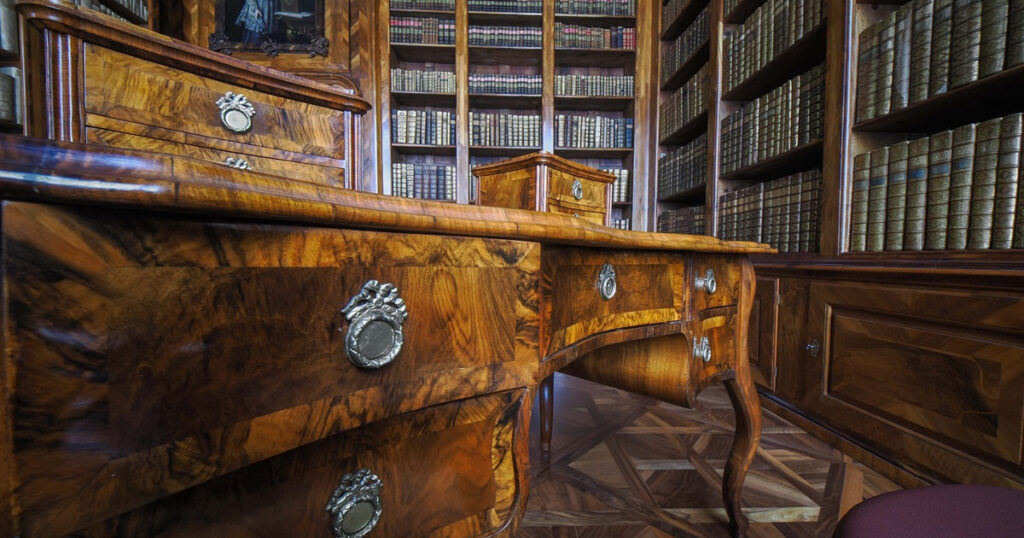
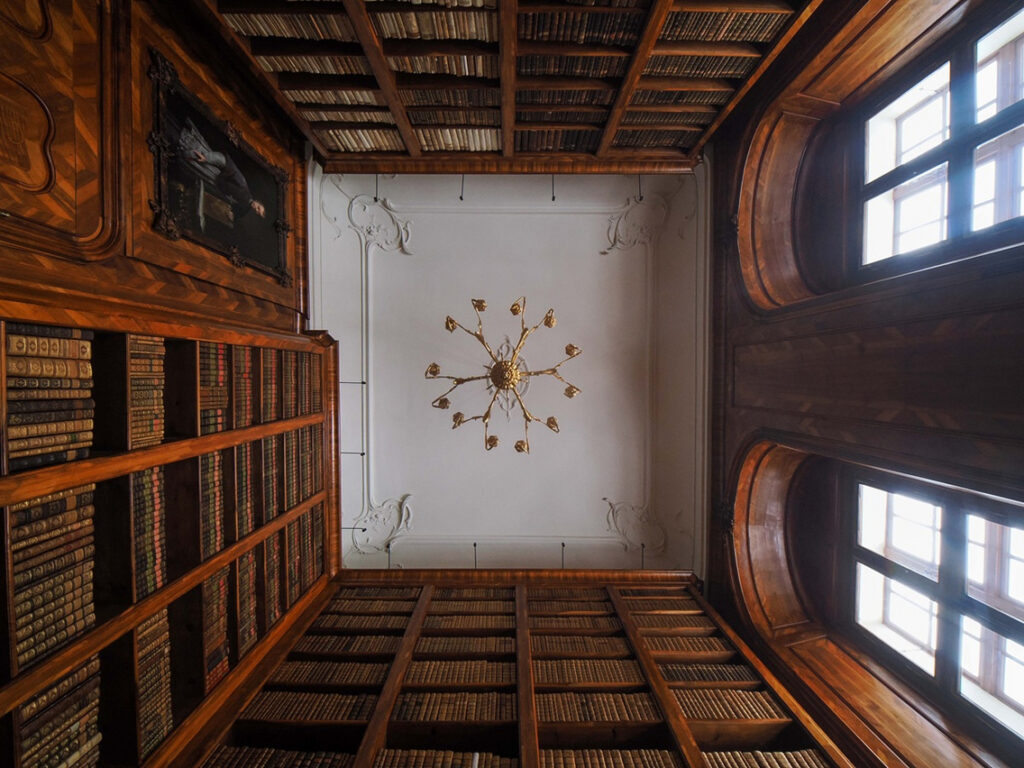
The collection consists of more than two thousand volumes. A significant portion of the books came from the estates of bishops, including those of Ignác Koller, Márton Padányi Biró, and other prelates. The selection is not random: theological works, classical authors, and historical and scholarly works together define the intellectual landscape that shaped the decisions and thinking of a church leader.
The history of book culture becomes even more tangible when we consider the world of liturgical books. In the Middle Ages, the texts of religious ceremonies were preserved in handwritten codices. The decorated initials and gilded elements of the texts recorded in Latin on parchment required special craftsmanship. The production of a single volume took months and served as an essential tool of church life. These books were valuable not only for their content but also for the way they were produced.
However, the library’s history did not end in the 18th century. In the early 20th century, the collection was organized into a unified system, cataloged, and arranged into the layout that can still be seen today. During World War II, the military hospital operating in the palace caused damage to the collection, but the damaged volumes have since been restored.
Today, the Koller Library serves primarily as a representative space. On April 11, in celebration of International Librarians Day, the exhibition will be open to the public with guided tours as part of the guided castle tours at specific times. During the visit, what emerges is not a series of isolated objects, but a complete system: the arrangement of the books, the proportions of the space, and the composition of the collection together paint a picture of an era.
When one looks at the shelves, a question inevitably arises: which of these volumes was the one that once truly shaped a decision, and whose influence is still felt today—even if invisibly?