
In St Mark’s Basilica in Venice, the city’s leader’s seat must have afforded a particular advantage: he could hear the singing more clearly than those standing further away. Centuries later, researchers also investigated what might have been the reason for this.
In their computer model, they moved the choir back by a single metre on the gallery. The change was surprising: the sound that had previously reached the doge directly now only reached him after being reflected, and had lost some of its clarity. Even a single metre made a difference to how the same melody sounded.
The Renaissance masters of Venice also composed with distance in mind. Separate groups of singers responded to one another, so that the musical dialogue could be followed spatially as well. The people filling the church, for their part, shaped the experience themselves. Research suggests that the festive tapestries and the sound-absorbing effect of the audience may have dampened the long-lingering reverberations, making the intertwining vocal parts easier to understand.
The image of people singing together first appeared in a Christian letter nearly two thousand years ago. Saint Ignatius of Antioch, whose feast day is celebrated on 17 October, likened the community to harmonised strings and a choir: he used the language of music to bring to life the unity experienced through love.
Works by the Venetian masters of music will be performed in Veszprém on Friday 16 October at 7.30 pm. In the ceremonial hall of the Archbishop’s Palace, the concert ‘The Sounds of La Serenissima’ by Cantica Aeterna and the Bacchus Consort will feature works by Monteverdi, Marini and Cavalli, amongst others.
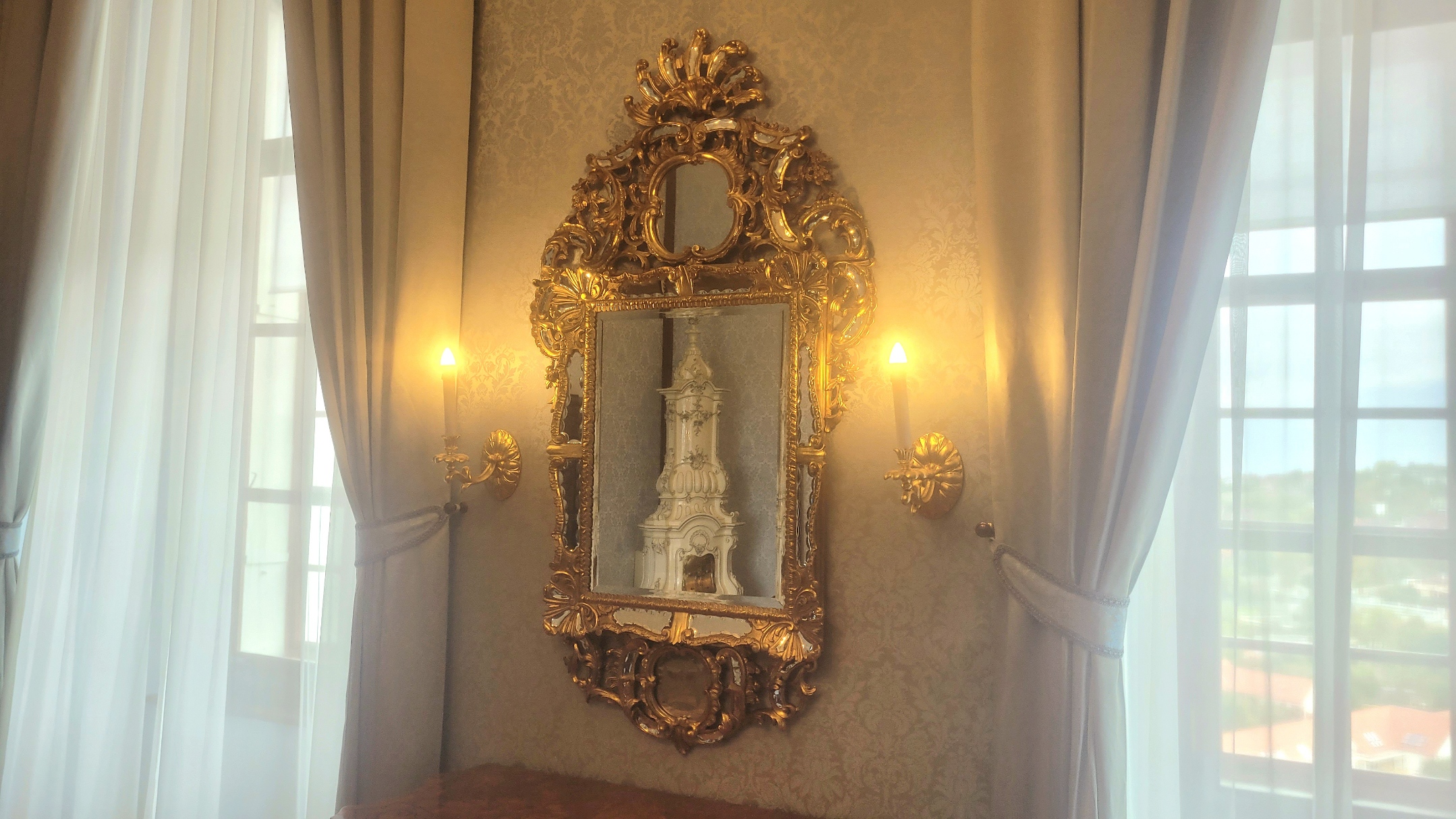
It wasn’t just music that made its way from Venice to Veszprém. We can also discover the palace and the Gizella Chapel on the ‘Light and Reverence’ castle tour – and, whilst we’re at it, we might even come across a special Venetian mirror.