Sphinxes, gilded details, and antique motifs at the Archbishop’s Palace
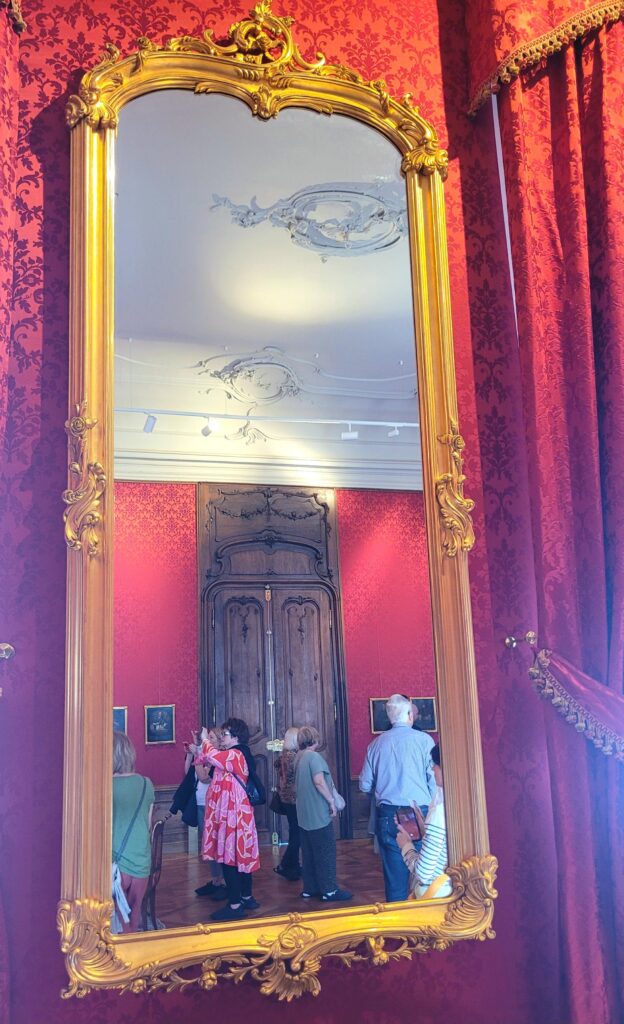
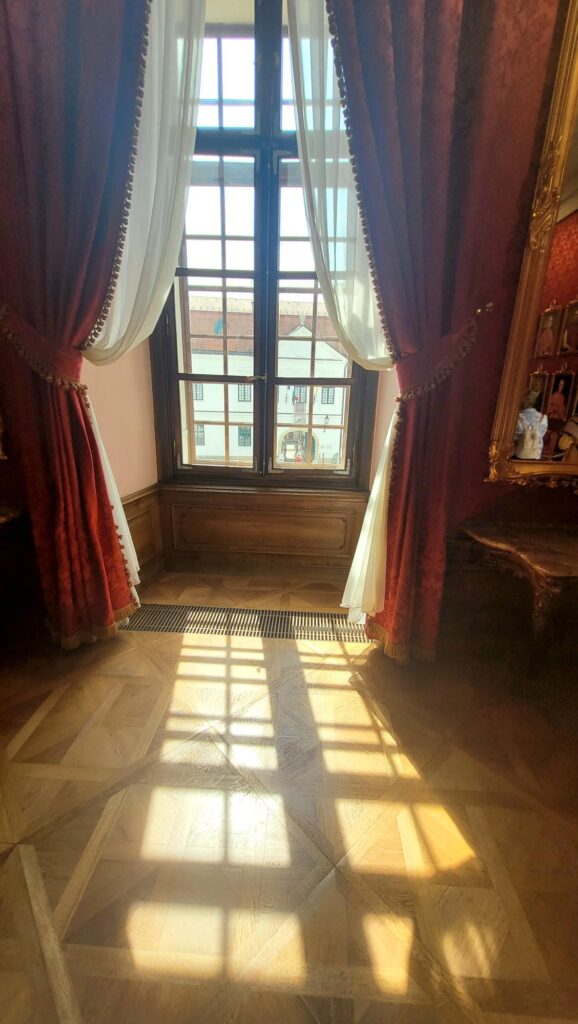
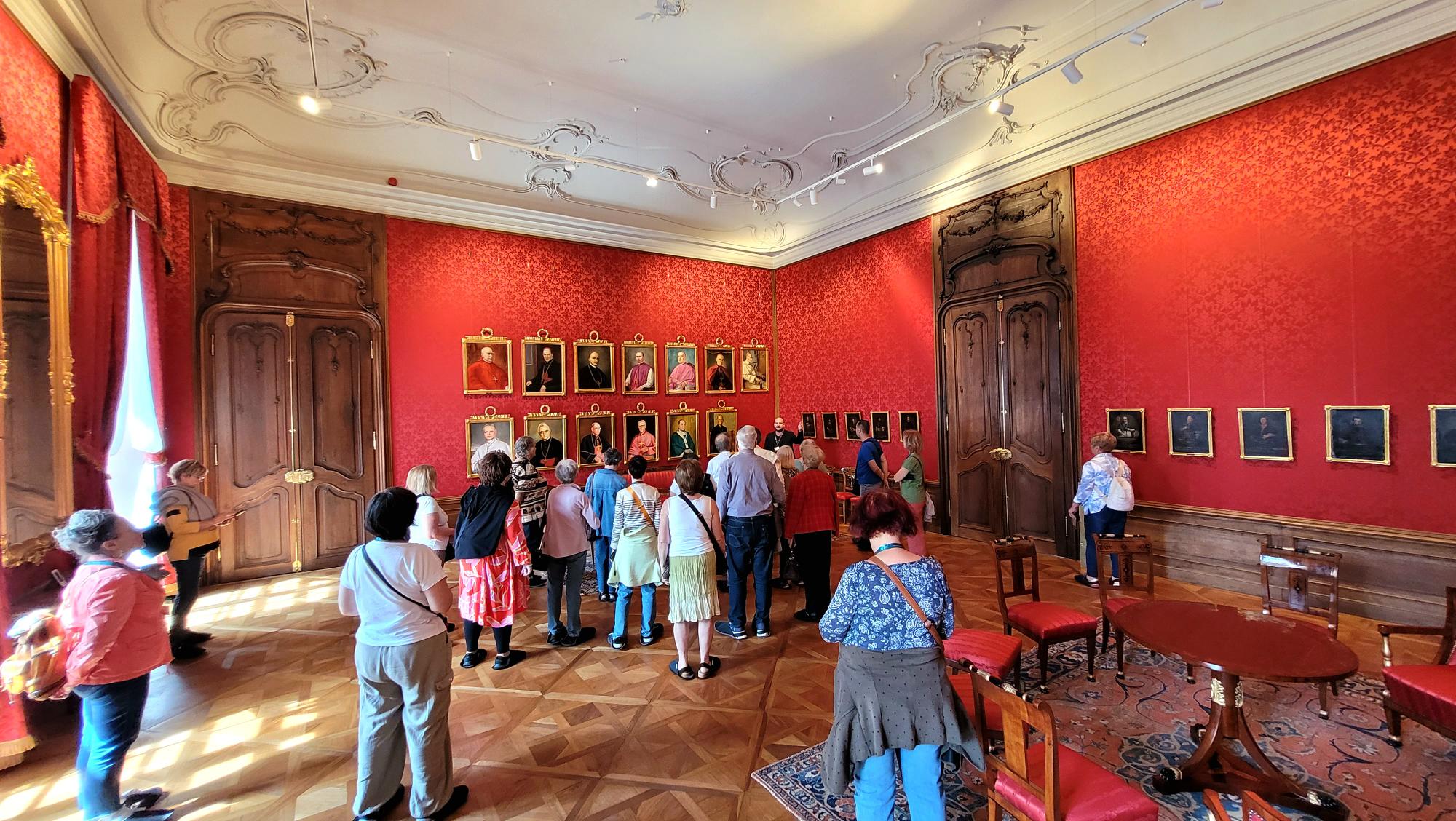
One of the most spectacular interior spaces in the Archbishop’s Palace in Veszprém is the Red Salon. The room makes a powerful impression at first glance. The deep red walls, gilded frames, carved furniture, mirrors, portraits of bishops, and the light streaming through the windows onto the parquet floor all combine to create a historical setting in which the concept of representation becomes almost tangible.
The distinctive character of the Red Salon is revealed in the details. The Empire style became dominant in Europe in the early 19th century, during the era of the French Empire. Its design drew inspiration from the art of ancient Rome, Greece, and Egypt. This is why motifs that carry both aesthetic and symbolic meaning may appear on the furniture and decorative elements.
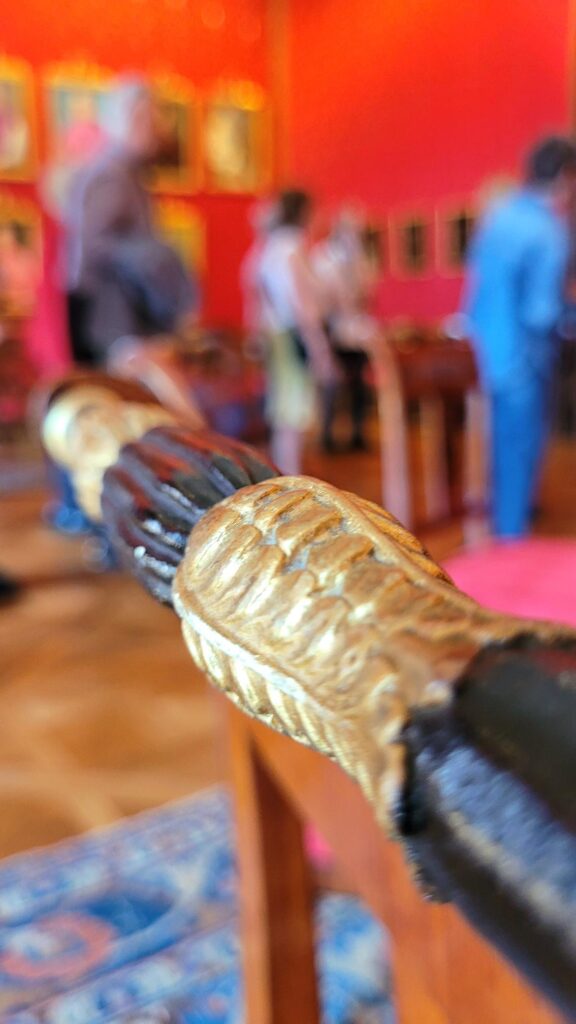
The figure of the sphinx is particularly intriguing in this space. This creature, combining a human head with a lion’s body, was associated in ancient Egypt with royal power and the concept of protection, and later became widespread in the art of the Mediterranean region. In 18th- and 19th-century European decorative art, the sphinx also served as a symbol of erudition: it expressed knowledge of ancient cultures, classical learning, and an interest in distant civilizations.
The salon’s interior conveys this world through multiple layers. The red color, the gilding, the gallery of episcopal portraits, and the Empire-style furnishings combine to create an atmosphere of prestige, erudition, and ecclesiastical representation. The hall is part of a building that was used as a bishop’s and later an archbishop’s palace, yet it is strongly linked to that European aesthetic culture which elevated the forms of classical antiquity to the visual language of representation.
The Red Salon is a prime example of how ecclesiastical rank, European culture, and mythological symbolism can come together in a single interior. Anyone walking through here steps into one of the most colorful chapters in the palace’s history: a space where red walls, gilded forms, and antique motifs come together to define the representative character of the Archbishop’s Palace in Veszprém.
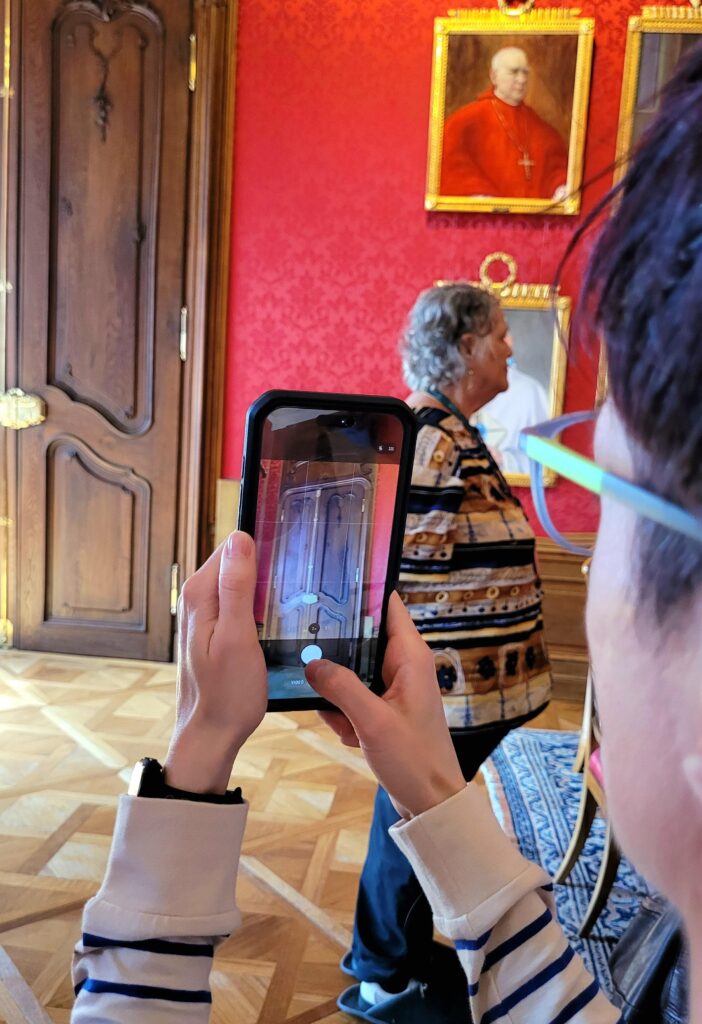
Perhaps this is the most peculiar feature of this room: the Red Salon does not reveal itself all at once. On a first visit, it is the colors that linger in the memory. On a second visit, the portraits. Later, a sphinx on the leg of a piece of furniture, a detail alluding to Hermes, the geometric grid of afternoon light on the parquet floor, or the delicate curve of a gilded mirror frame.
I wonder how many such details remain hidden from those who merely pass through the hall, and how many become visible to those who actually take the time to explore it during a guided castle tour ?