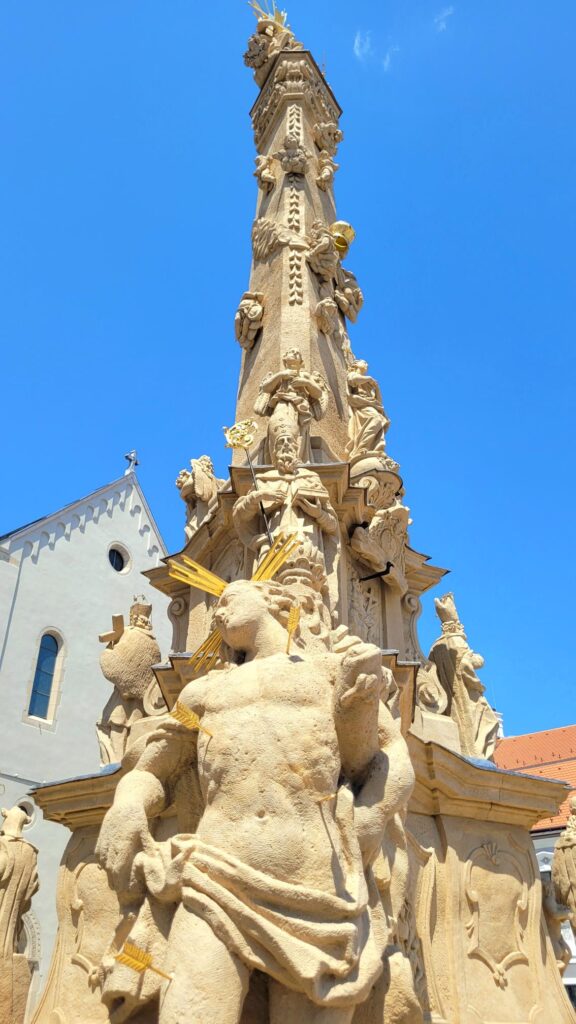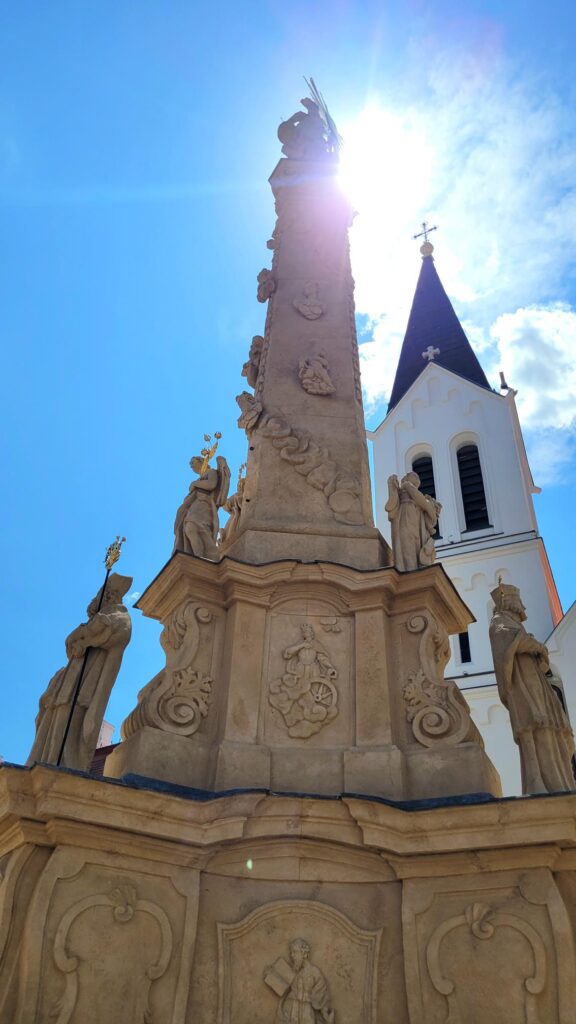
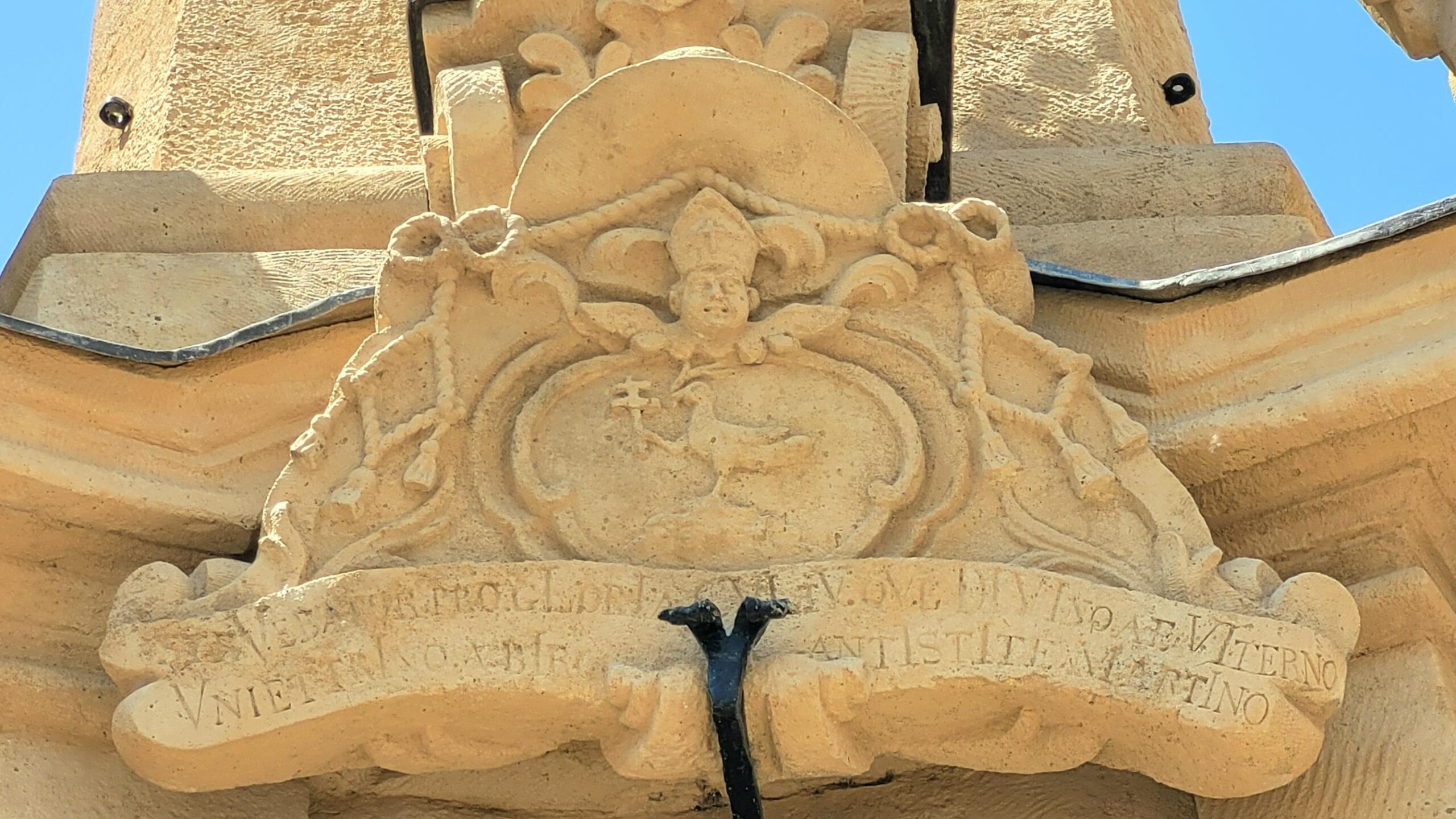
In the heart of Várhegy in Veszprém, near the cathedral and the Archbishop’s Palace, stands a fifteen-meter-tall Baroque sculpture. The Holy Trinity statue is now one of the castle’s most recognizable landmarks and gives the square its name. Anyone who stops in front of it sees at once a religious symbol, an urban planning decision, and a reflection of an 18th-century bishop’s thinking.
Trinity columns were erected in the main squares of many Central European cities in the wake of epidemics. In Buda, Sopron, and Győr, they are associated with the memory of the plague. The story of Veszprém is more nuanced. The erection of the Veszprém statue was not preceded by a direct plague epidemic; its spiritual background was Bishop Márton Padányi Biró’s veneration of the Holy Trinity and his ambitious urban development program. In the mid-18th century, the bishop’s construction projects gave Várhegy a new look. The statue became the centerpiece of this carefully planned Baroque layout.
Construction of the monument began in 1749, and it was consecrated in 1750 on Trinity Sunday. Work continued for several more years. Master sculptor Ferenc József Schmidt, stonemason Tamás Walch, and contemporary masters from Veszprém worked on it. The final result is one of the most richly detailed works of Hungarian Baroque sculpture: twenty-nine statues and six reliefs make up the monumental ensemble.
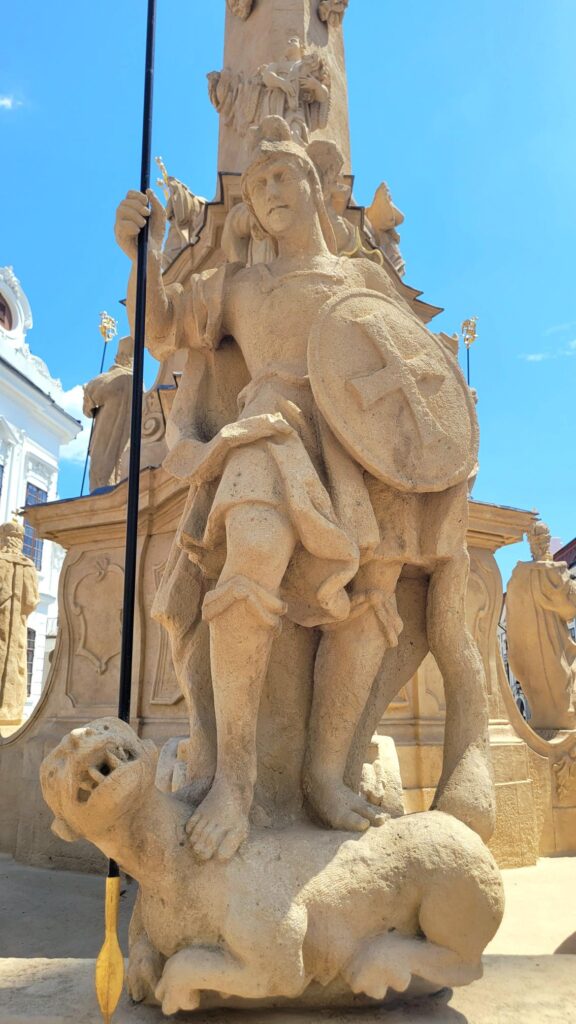
Most visitors first notice its height. Then, little by little, the details come into view. At the top, the figures of the Holy Trinity appear, adorned with gilded elements. Further down, saints, angelic figures, and biblical references follow one another. The composition also features Saint Roch, Saint Florian, Saint Martin, and Saint George the Dragon Slayer. Márton Padányi Biró also included his own patron saint, Saint Martin, in the sculpture group.
The square derives its unique charm from its surroundings. St. Michael’s Cathedral rises just a few steps away, the Archbishop’s Palace stands nearby, and the historic buildings on Vár Street come together in a scene that looks almost like a stage set. The Baroque cityscape is particularly striking: stone facades, church towers, and statues create a panorama that takes on a completely different atmosphere in the light of day and under the evening lights.
The recent restoration has yielded yet another surprise. Experts discovered that some of the original sculptures had been hidden in the garden of the Davidikum for decades. An 18th-century fresco from Sümeg also aided the restoration, as it depicted the Veszprém monument in its original state. This allowed the restorers to more accurately reconstruct part of the original color scheme.
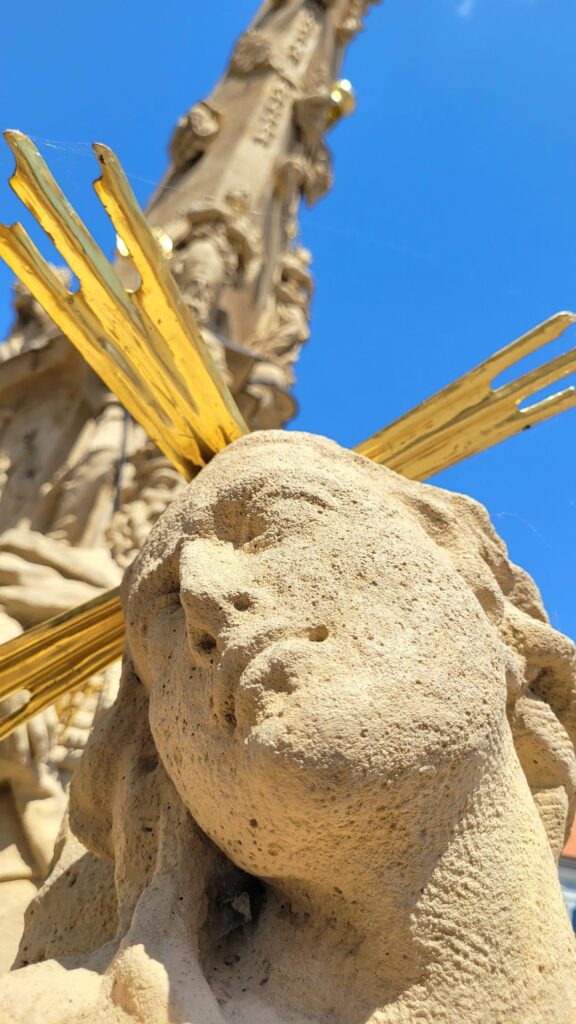
The Holy Trinity Statue remains one of the most important gathering places on Castle Hill. Guided castle tours always pass through this square, as it offers a particularly clear view of how the castle’s religious, historical, and architectural heritage intertwine. Anyone who stops here for a few minutes will more easily understand why Veszprém’s Castle District was not simply a street, but a deliberately composed historical space.