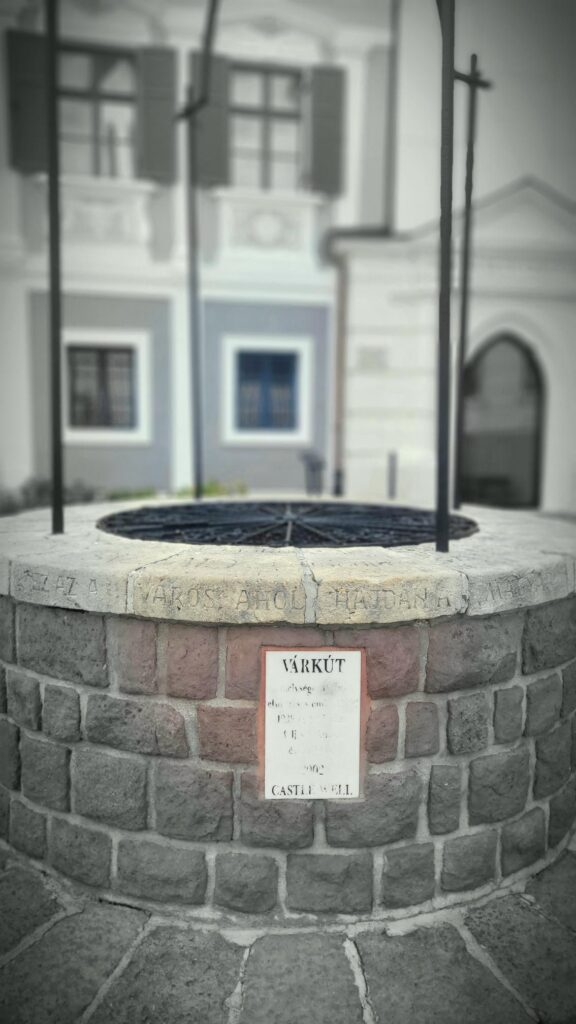
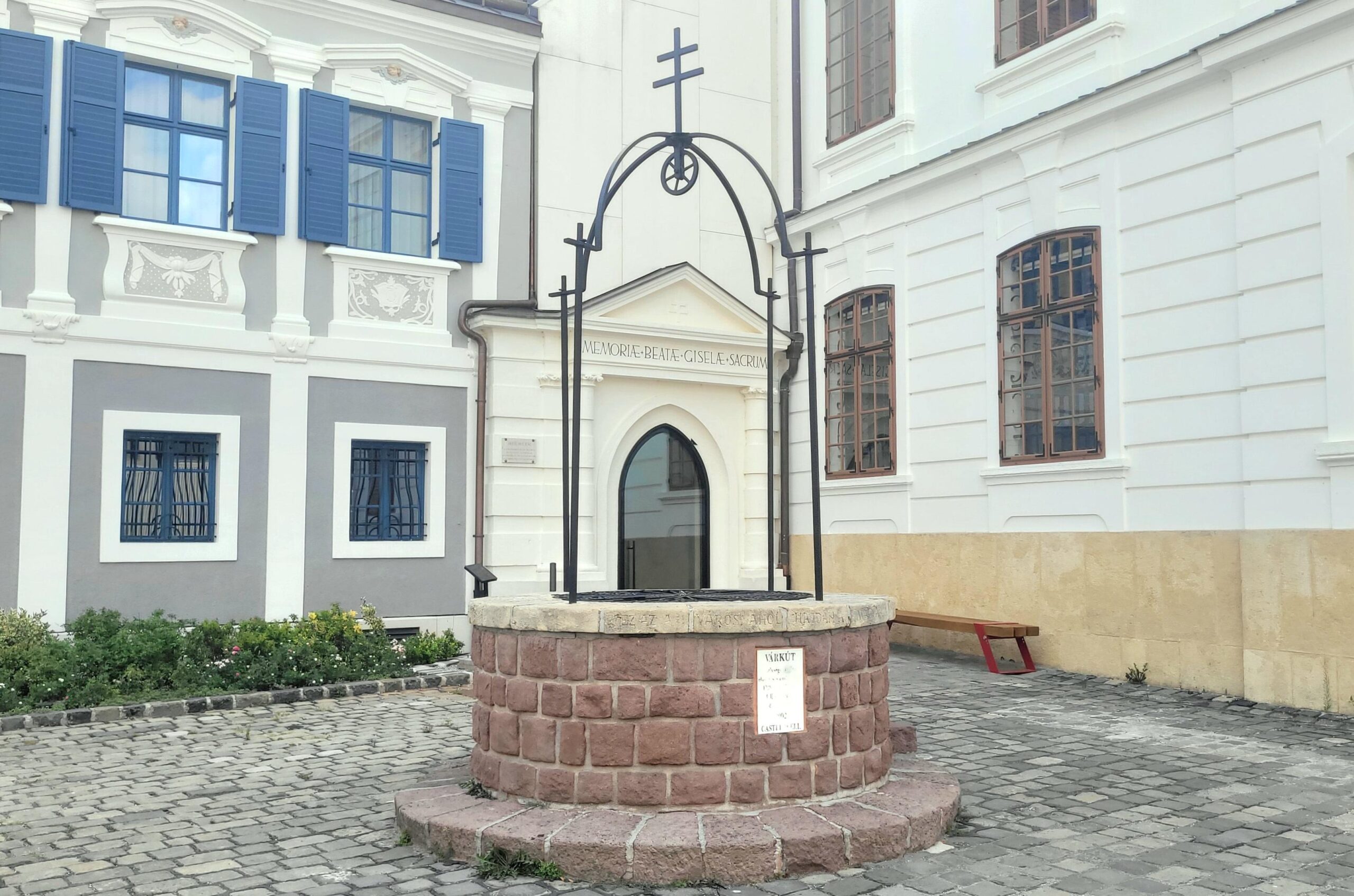
It’s easy to walk right past the Várkút on Szentháromság Square in Veszprém. Beneath the stone well house, however, lies a depth that’s hard to imagine from above: in 2002, archaeologists reached the bottom at a depth of 40.8 meters.
During the excavation, some unusual artifacts were uncovered. In addition to wooden fragments, pottery, glass shards, and a 17-meter-long, hand-forged chain, approximately 250 kilograms of coins were found in the upper layers. For decades, visitors had been tossing this much “lucky money” into the depths.
Of course, there was also a legend associated with the well. According to the stories, a secret passage led from it out of the castle. Archaeological research, however, has not uncovered such a tunnel.
The real story is perhaps even more interesting.
The water had to be brought up from below
When the current Archbishop’s Palace was built in the 18th century, water was not drawn from the Várkút. The water from the Úrkút, which springs from beneath Várhegy, had to be raised about forty meters higher.
In 1766, Bishop Ignác Koller entrusted the task to György Tumler, a master miller from Veszprém. However, Tumler died before the work was completed, so the task of building the water-lifting system fell to his son, Henrik, who was only eighteen years old.
The mill’s waterwheel powered three pumps, which forced water up to Várhegy through a lead pipe. By 1767, the system was already in operation. For its time, this was considered an extraordinary feat of engineering, and it served as the castle’s water supply for more than a century.
On the “Light and Reverence” guided tour of the castle, the Archbishop’s Palace not only reveals itself but also becomes easier to understand. Behind the frescoes, the ceremonial halls, and the row of salons, the everyday life of the residence also comes into focus: how people lived there, how it served its inhabitants, and what expertise was required to make it truly livable. Today, we take it for granted that we can turn on a faucet. In the 18th century, however, simply getting water up to this height was considered an engineering feat. Perhaps this is precisely what makes the Castle District so exciting: the greatest stories lie just beneath the surface, waiting to be discovered.
What's more, water has another meaning in this place.
In the Christian tradition, it is one of the most ancient symbols of life, purification, and rebirth. The waters of baptism symbolize new life, and the “living water” refers to the gift of the Holy Spirit.
Perhaps that is why it’s worth stopping for a few seconds at Trinity Square. While much of Castle Hill’s history is visible, some of the most interesting aspects require a closer look.